

Night mode
GET RAREFILE PREMIUM

For VIP Members Only

RSS Feed

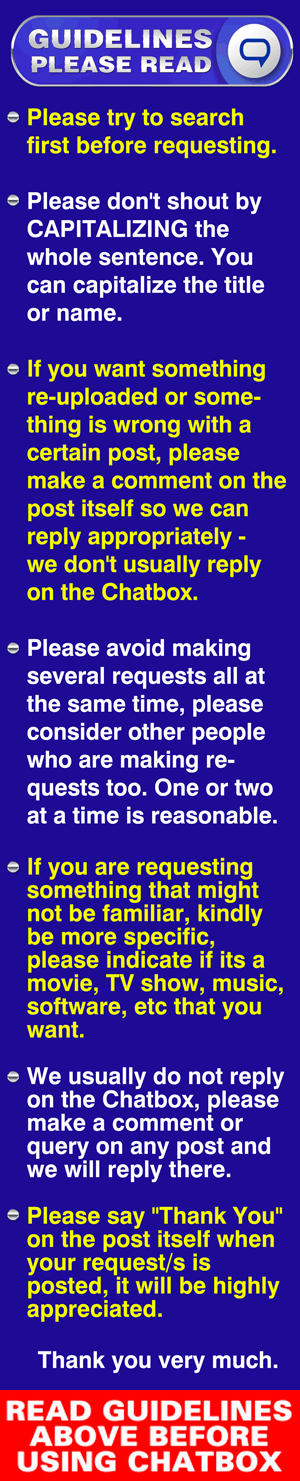
GUIDELINES Please Read
Download Rosetta Stone



Car Mechanics is the UK’s only car magazine with essential advice on maintaining and repairing popular makes and models. It’s an invaluable motoring resource that appeals to both the DIY car enthusiast and the more experienced motor trade professional. Car Mechanics has helped save money for our readers every month since 1958. Each issue includes a wide range of in-depth features written in a clear, straightforward manner.

Boxing New will keep you update to date with all the latest news. Recognised as the leading magazine in our genre, Boxing News provides stories and features that transcend the sport.

Boxing New will keep you update to date with all the latest news. Recognised as the leading magazine in our genre, Boxing News provides stories and features that transcend the sport.

Each issue of Bloomberg Businessweek features in-depth perspectives on the financial markets, industries, trends, technology and people guiding the economy. Draw upon Bloomberg Businessweek’s timely incisive analysis to help you make better decisions about your career, your business, and your personal investments.

AppleMagazine is a weekly publication packed with news, iTunes and Apps reviews, interviews and original articles on anything and everything Apple. AppleMagazine brings a new concept of light, intelligent, innovative reading to your fingertips; with a global view of Apple and its influence on our lives – be it leisure activities, family or work-collaborative projects. Elegantly designed and highly interactive, AppleMagazine will also keep you updated on the latest weekly news. It’s that simple! It’s all about Apple and its worldwide culture influence, all in one place, and only one tap away.
Aug
20

This book presents a comprehensive overview of children’s transitions to kindergarten as well as proven strategies that promote their readiness. It presents theories and research to help understand children’s development during the early childhood years. It describes evidence-based interventions that support children in developmental areas essential to school success, including cognitive, social-emotional, and self-regulatory skills. Chapters review prekindergarten readiness programs designed to promote continuity of learning in anticipation of the higher grades and discuss transitional concerns of special populations, such as non-native speakers, children with visual and other disabilities, and children with common temperamental issues. The volume concludes with examples of larger-scale systemic approaches to supporting children’s development during the transition to kindergarten, describing a coherent system of early childhood education that promotes long-term development.
Featured topics include
Consistency in children’s classroom experiences and implications for early childhood development.
Changes in school readiness in U.S. kindergarteners.
Effective transitions to kindergarten for low-income children.
The transition into kindergarten for English language learners.
The role of close teacher-child relationships during the transition into kindergarten.
Children’s temperament and its effect on their kindergarten transitions.
Kindergarten Transition and Readiness is a must-have resource for researchers, clinicians and related professionals, and graduate students in child and school psychology, educational psychology, social work, special education, and early childhood education.

In 1895, Eleanor Marx and Edward Aveling were two of the best-known socialists in Britain, mixing with the most influential figures of their time, from Keir Hardie to William Morris. The couple were committed to building a socialist political force based on the ‘scientific’ theories of Eleanor’s father Karl and his collaborator, Friedrich Engels. Marx and Aveling’s ‘letters’ to Russia from England offer a unique perspective on British socialism as it entered its crucial phase, which culminated in the foundation of the Labour Party in 1900. As they reported from the heart of capitalist Britain, a Liberal government fell, having failed to keep its promises to labour. The remainder of the year saw the election of a Conservative-led Unionist administration, an underwhelming general election performance by socialists, and the death of Engels. These lively, accessible letters include sharp reflections on Victorian cultural figures including Oscar Wilde, Annie Besant, and the ‘new woman’ novelists. An introductory essay sheds light on the authors’ complex, tumultuous life and work together, and reveals the friendships and political connections Karl Marx, Engels and the authors had with prominent Russian revolutionaries. The book will be of interest to students, historians, and all those interested in left politics and movements in Britain.
Aug
20

In this book, Dr. Li and his author team plan to emphasize why mouse models are useful in vivo systems for understanding disease mechanisms and developing therapeutic strategies in blood cancers. The authors do not intend to cover all types of blood cancers; instead, they will focus on some major ones such as leukemias and lymphomas. However, the authors will try to cover as much as they can the cancer types and point out that many blood cancers need to be studied in mouse disease models although they are still not available at present. A major focus in the book will be to show what we can or cannot learn from mouse disease models and to also show the critical contributions of mouse models in therapeutic drug development.

Originally published in 1966 On the Syllogism and Other Logical Writings assembles for the first time the five celebrated memoirs of Augustus De Morgan on the syllogism. These are collected together with the more condensed accounts of his researches given in his Syllabus of a Proposed System of Logic an article on Logic contributed to the English Cyclopaedia. De Morgan was among the most distinguished of nineteenth century British mathematicians but is chiefly remembered today as one of the founders of modern mathematical logic. His writings on this subject have been little read, however since apart from his Formal Logic, they lie buried for the most part in inaccessible periodicals. De Morgan’s own later amendments are inserted in the text and the editorial introduction gives a summary of the whole and traces in some detail the course of the once-famous feud with Sir William Hamilton of Edinburgh.

The Second Edition of this successful textbook provides a clear, well-written introduction to both the fundamental principles of optics and the key aspects of photonics to show how the subject has developed in the last few decades, leading to many modern applications. Optics and Photonics: An Introduction, Second Edition thus provides a complete undergraduate course on optics in a single integrated text, and is an essential resource for all undergraduate physics, science and engineering students taking a variety of optics based courses.
Specific changes for this edition include
New material on modern optics and photonics
Rearrangement of chapters to give a logical progression, comprising groups of chapters on geometric optics, wave optics and photonics
Many more worked examples and problems
Substantial revisions to chapters on Holography, Lasers and the Interaction of Light with Matter

This title was first published in 20/11/2001: The intellectual and practical successes of science have led some scientists to think that there are no real limits to the competence of scienece, and no limits to what can be achieved in the name of science. This view (and similar views) have been called Scientism. In this book, scientists’ views about science and its relationship to knowledge, ethics and religion are subjected to critical scrutiny. A number of natural scientists have advocated Scientism in one form or another – Francis Crick, Richard Dawkins, Carl Sagan, and Edward O. Wilson – and their impact inside and outside the sciences is considered. Clarifying what Scientism is, this book proceeds to evaluate its key claims, expounded in questions such as: is it the case that science can tell us everything there is to know about reality? Can science tell us how we morally ought to live and what the meaning of life is? Can science in fact be our new religion? Ought we become “science believers”? The author addresses these and similar issues, concluding that Scientism is not really science but disguised materialism or naturalism; its advocates fail to see this, not being sufficiently aware that their arguments presuppose the previous acceptance of certain extra-scientific or philosophical beliefs.
HOW TO SEARCH

GET RAREFILE PREMIUM NOW

UPDATES AND TIDBITS

Download the Latest IDM

HJSPLIT & 7-ZIP Download

Download K-LITE CODEC

Download JDOWNLOADER

Download WINRAR